
Squeal when slowing
Thin pads triggering their wear indicator.
Diesel pickups welcome, from injectors to turbochargers · (720) 230-1727
Brakes
Mountain descents are hard on brakes. Each wheel is measured and every component checked, so you replace what is worn and nothing that is not.
Get the brakes checked — (720) 230-1727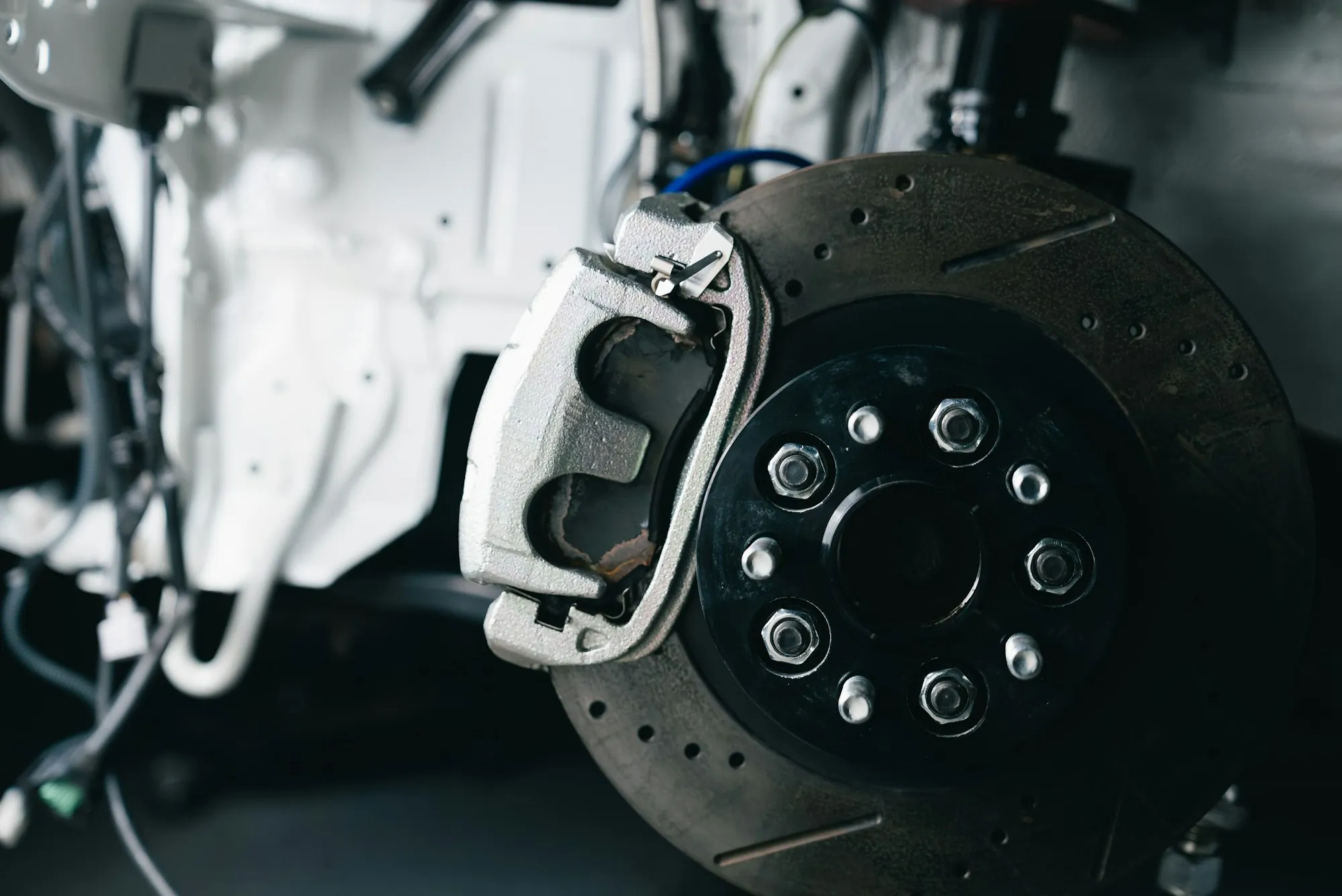
Thin pads triggering their wear indicator.
Metal on metal; the rotor is being damaged.
Air, a leak or tired fluid.
A sticking caliper or a collapsed hose.
Uneven rotor surfaces from heat.
Overheated pads, or a caliper that is not releasing.
Pad thickness and rotor thickness at every wheel, against the specified minimums.
Caliper slides and pistons, hoses for bulges, lines for corrosion and leaks.
Moisture content, which lowers the boiling point and causes fade on long grades.
Once the measurements are in, the repair is matched to them: pads alone where the rotors are healthy, rotors where they are below minimum or warped, and calipers or hoses only where they have actually failed.
New pads are bedded in on a road test so they grip evenly from the start, and the pedal feel is checked again before the vehicle is handed back.
If a caliper is sticking, the cause is checked too: a seized slide pin or a corroded piston can be cleaned and serviced in some cases rather than replaced, and you will hear which applies.
The biggest factors are which axle needs work, whether the rotors can stay, and whether a caliper or hose has failed. Pads alone is the smallest bill; adding rotors, calipers or a fluid exchange adds parts and time. Catching the job at the squeal stage is the simplest way to keep it small.
Say which wheel the noise seems to come from, whether it happens every stop or only the first few, and whether the pedal feel has changed. Mention whether the vehicle tows or regularly comes down the Parkway loaded; that affects which pads make sense.
If the pedal has changed suddenly, rather than gradually, say so. A sudden change points to a leak or a failed component and is worth looking at before the next long drive.
For a short while, usually yes; the squeal is an early warning. Have the pads measured soon. Waiting until it grinds turns a pad job into a rotor job.
No. If the rotors are above minimum thickness and run true, they can stay. The measurement decides.
Usually air in the system, a small leak or fluid that has absorbed moisture. All three are tested before anything is replaced.
Call with the symptoms. The free vehicle inspection includes a look at the brakes.