
Steady light
A fault is stored; get it read soon.
Diesel pickups welcome, from injectors to turbochargers · (720) 230-1727
Diagnostics
A code points to a system. Testing points to the part. The light gets traced all the way to a confirmed cause before anything is replaced.
Explain my warning light — (720) 230-1727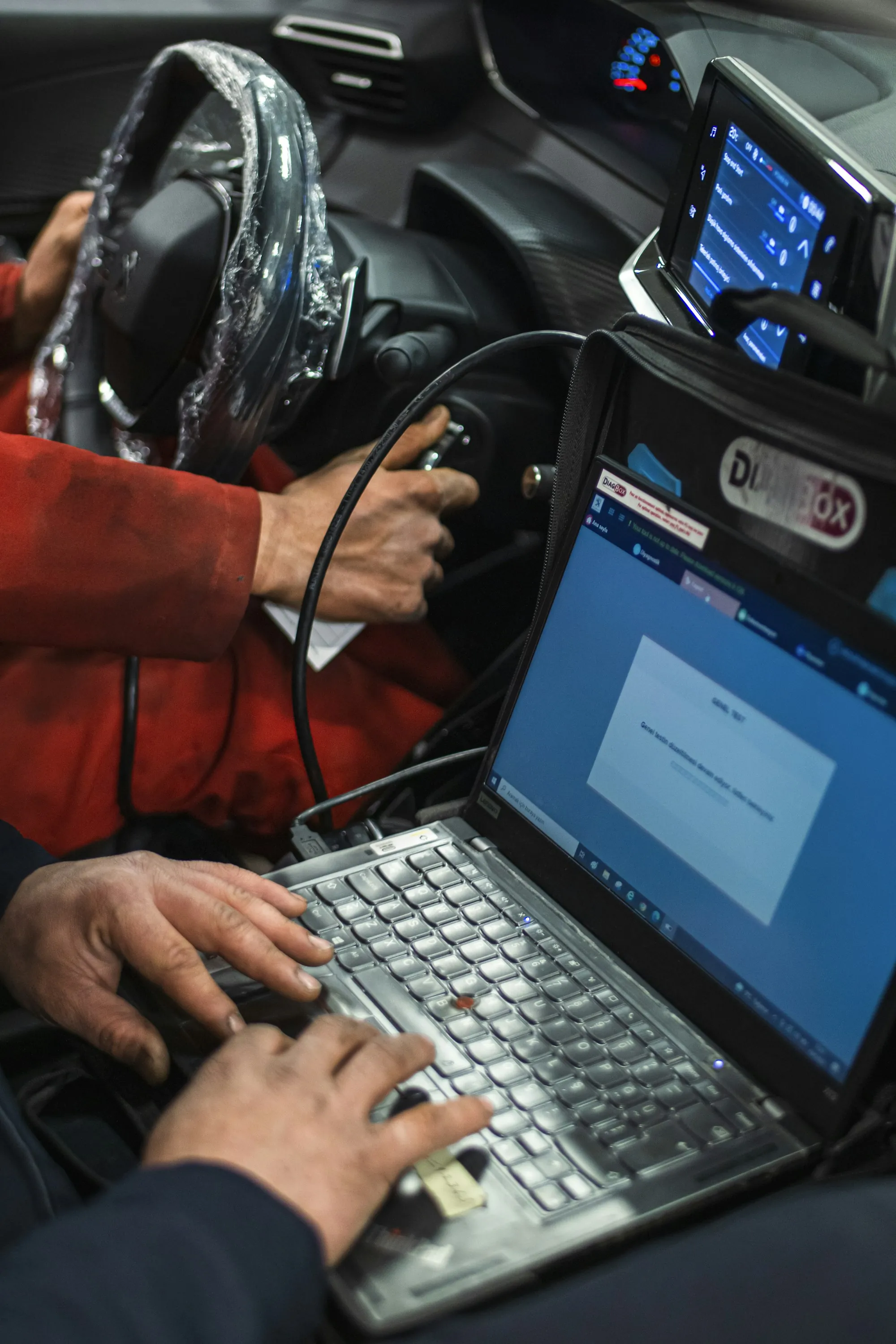
A fault is stored; get it read soon.
Active misfire; ease off and call.
Ignition, fuel or air leaks.
Fuel delivery or sensor faults under load.
A sensor reading out of range.
Often a loose cap; give it a few drives.
Stored codes, freeze-frame data and live sensor readings.
Compare readings with specifications to find the system at fault.
Test the wiring and the component directly until one cause is confirmed.
Testing time is quoted before it starts, so the cost of finding the answer is known. Once the cause is confirmed, you get a separate price for the repair and decide whether to proceed.
If more than one fault turns up, they are listed in order of importance, so you can fix what matters first and plan for the rest.
Intermittent faults take patience. Where a problem only shows up under certain conditions, the testing is planned around recreating them, such as a cold start, a hot idle or a load on the climb.
Simple faults with a clear code and an obvious failed part take little testing. Intermittent problems, wiring faults and issues that span more than one system take longer. The testing time is quoted up front, and if it needs to grow, you are asked first.
Tell us whether the light is steady or flashing, how the engine behaves and what happened just before it came on. If a parts store already read the code, pass it along; it narrows the starting point.
If the light comes and goes, note when: first thing in the morning, after a long drive, in rain or snow. Patterns like that save a lot of testing time.
Codes describe symptoms. A sensor code can be caused by wiring, a vacuum leak or a fault elsewhere, and a new sensor would not fix any of those.
No. The light goes out until the fault is detected again, and the problem remains.
It means an active misfire that can damage the catalytic converter. Reduce speed and load and call before driving far.
Yes. Stored and pending codes, along with freeze-frame data, show the conditions when a fault happened. That history helps when a problem is intermittent.
Describe the symptom and we will explain how we would test it and what that costs.